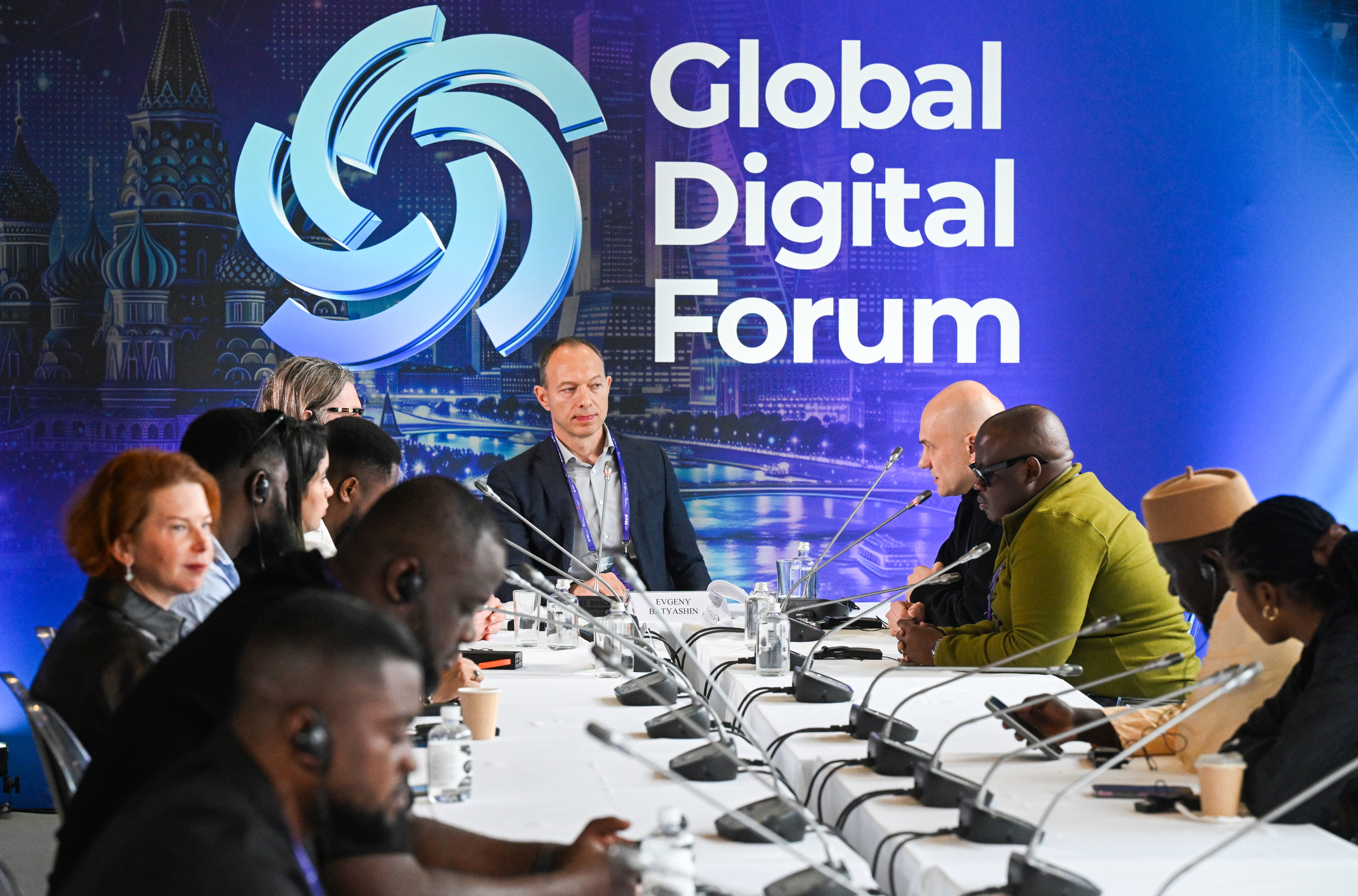


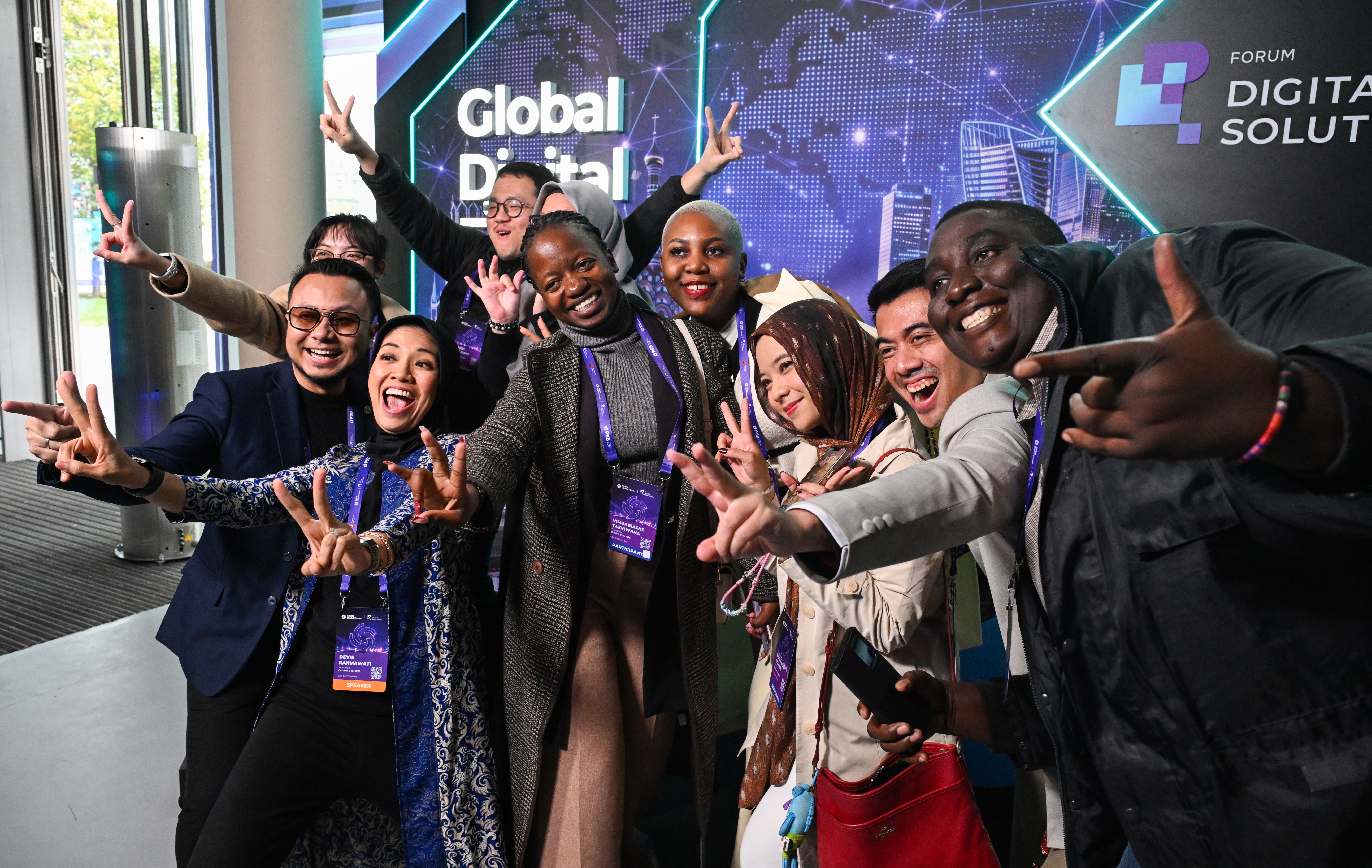
The 2nd Global Digital Forum has drawn to a close. Over three days, the Mechta venue in Moscow’s Gorky Park hosted more than 60 sessions – roundtables, lectures, workshops, and presentations – welcoming over 1,300 guests, among them 730 experts from 111 countries.
More than 70 high-ranking Russian and international officials took the stage at plenary sessions and panel discussions, including deputy prime ministers, ministers of digital development, and heads of international organizations and regional blocs. On the sidelines, participants signed 150 agreements and memorandums and held over 200 bilateral meetings.
Across the three days, representatives of government, business, international organizations, civil society, educational institutions, and professional associations explored digital transformation trends and technological solutions for digital infrastructure, along with opportunities for cooperation and the integration of products into national digital ecosystems.
One of the highlights of the forum's first day was the statement by Deputy Prime Minister and Chief of the Government Staff of the Russian Federation Dmitry Grigorenko at the High-Level Plenary Session titled The AI Race: One Set of Rules or Many? He spoke about digital transformation achievements in Russia and the importance of developing an international framework for regulating artificial intelligence.
The plenary session Digital Sovereignty: From Resource to Export Asset became a defining moment of the forum’s second day, where First Deputy Chief of Staff of the Presidential Executive Office Sergey Kirienko stated that Russia is ready to become a full-fledged partner for other countries in the realm of digital technologies.
The forum’s closing day was anchored by remarks from Deputy Chief of Staff of the Presidential Executive Office Maxim Oreshkin, who stressed that for a country to achieve genuine sovereignty in AI, it needs sovereignty over its data and its own infrastructure.
“Only two countries have achieved genuine sovereignty across these parameters, coming close to full sovereignty: the United States and China. Russia is close to these levels, lagging slightly in technological sovereignty in the field of microelectronics,” he noted.
Oreshkin also said that Russia has one of the lowest unemployment rates in the world.
“Russia currently has one of the lowest unemployment rates in the world, if not the lowest, at 2.2 percent, according to the latest statistics,” he observed.
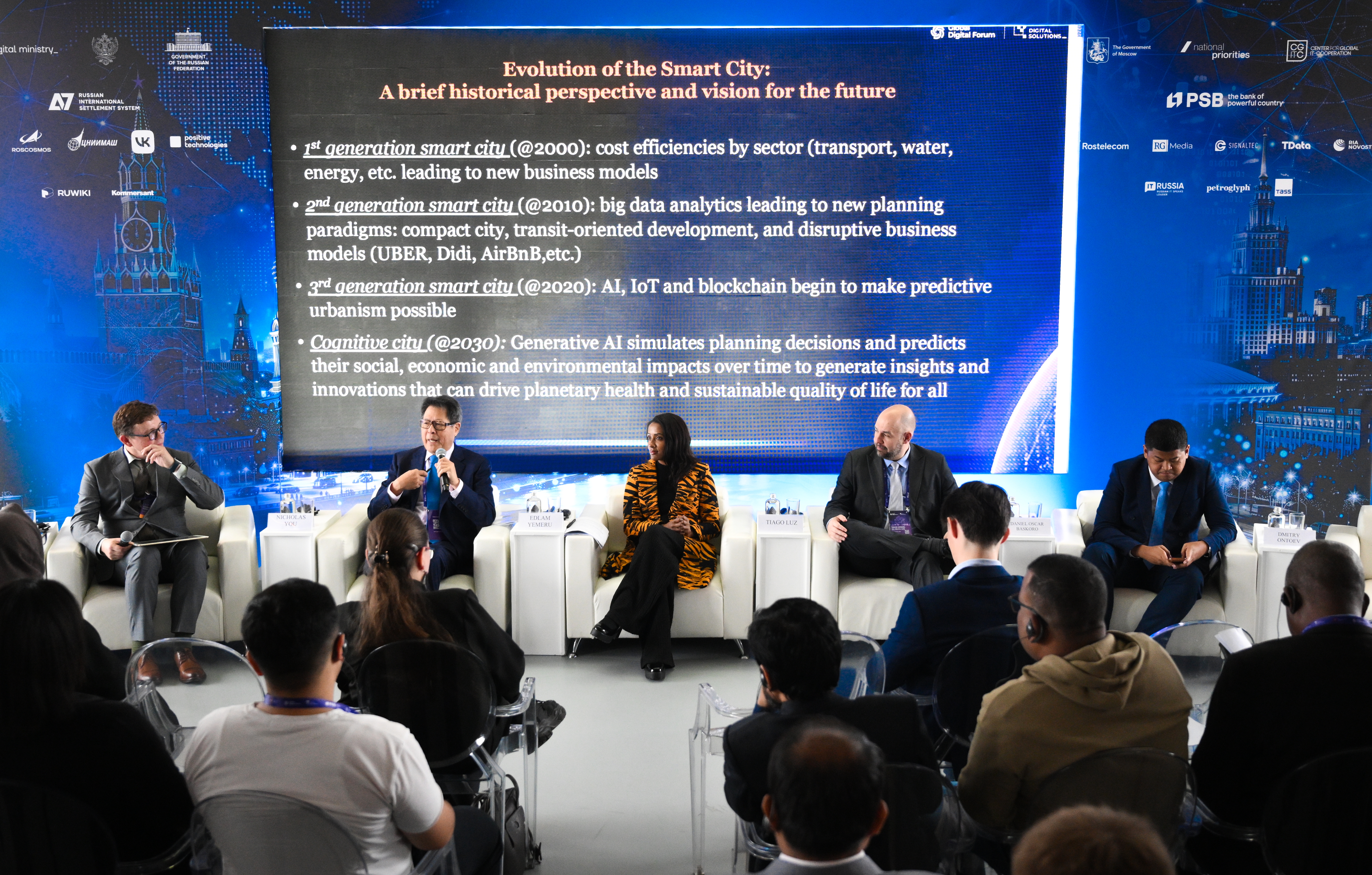
Secretary General of the World Smart Sustainable Cities Organization (WeGO) Jeong-kee Kim delivered a visionary lecture on how digital transformation is reshaping cities, and on why the next stage of the smart city concept must go beyond technology.
During the discussion on international cooperation and specialist training, Cristina Amor Maclang, co-founder of the International Digital Economies Association (iDEA), said the presentation Digital Sovereignty in a Multipolar World: Tools for Assessing and Harmonizing Approaches to IT Cooperation resonated with most GDF participants. China and the United States host 90 percent of the world’s data centers, she added.
One such tool could be the universal index of national digital sovereignty presented by Head of the Analytical Department at the Center for Global IT Cooperation (CGITC) Yury Lindre. He noted that 117 countries had been assessed by the study.
“Russia ranks third, after China and the United States, but tops the sovereignty from external influence rankings,” the expert said commenting on the findings.
Participants in the panel discussion, Game Worlds: Who Is the Real Creator? Were unanimous that artificial intelligence is changing the way video games are developed, but human creativity and oversight remain essential. The experts noted that only high‑level developers will remain – those who can set the agents a task.
During the panel discussion Open-Source Models: How to Balance Opportunities and Vulnerabilities, experts discussed plans for the use and development of open-source models, as well as the risks associated with their adoption. Dmitry Markov, CEO of VisionLabs, believes that Russia has found a balance between openness and security in the development of AI models.
At the panel discussion How Countries Compete for Tech Talent, international experts discussed foreign specialists’ adaptation and the role of soft power.
Head of the Start in Moscow project (Russia) Ilya Fetiskin, Human Capital Development Autonomous Non-Profit Organization under the Moscow Government, said that competition for human capital now extends beyond the traditional labor market.
“It is necessary not only to attract and help people adapt, but also to retain them and integrate them into Russian society and the economy. The impatriation program is probably one way to establish career paths for foreign nationals in Russia and define what each region needs to do to support them,” he said.
President of the Unified Center for the Creative Economy (ANO Creative Economy) Marina Mongush discussed this in greater detail in her visionary lecture. noted that Russia’s creative economy is growing nearly four times faster than the national economy as a whole. She also highlighted the key principles of Russia’s creative economy: decentralization and respect for people.
Participants in the session, Language, Culture, Data: AI for Low-Resource Languages, discussed how artificial intelligence can become a powerful tool for preserving and developing the linguistic and cultural heritage of different peoples.
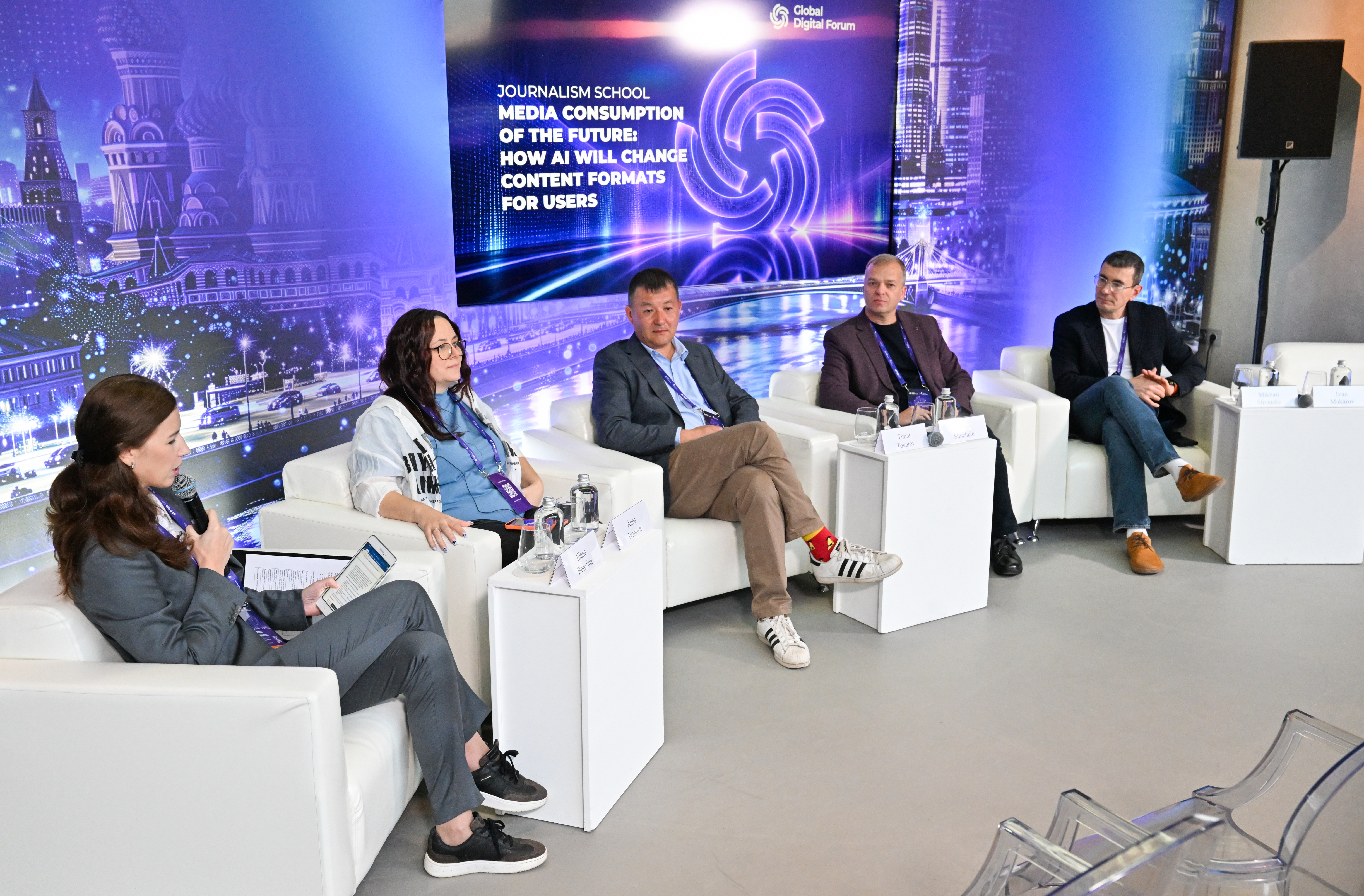
Experts discussed how neural networks are reshaping journalistic work at the session, Journalism School – AI in the Newsroom: Implementation, Opportunities and Risks. Vedomosti’s VEDY Media Deputy Editor-in-Chief Alexey Gavrilko believes that Gen Z working in newsrooms tend to trust artificial intelligence more. They don’t think AI is something to be feared – it is a tool to be used.
“I believe that without this tool, it would simply be impossible for our newsroom, with its limited staff, to produce the content we offer to the market,” Alexey Gavrilko said.
A cosmonaut's working day aboard the International Space Station (ISS) lasts eight hours, with part of that time spent in meetings with mission control centers in different countries, Russian cosmonaut Sergei Prokopyev told participants during the forum's culture and outreach track.
Decisions at the level of the International Telecommunication Union (ITU) are needed to counter the use of Starlink satellite internet systems to interfere in the internal affairs of sovereign states, Head of a Division at the Foreign Ministry’s Department of International Information Security Boris Vasilyev pointed out during the panel discussion, NGSO Communication Systems: From National Ambitions to Regional Cooperation.
The key topics addressed by the session Smart City KPIs: A New Quality Standard included the digitalization of major cities, the need to integrate urban systems, and the role of AI in city management.
Tiago Luz, Director of PRODAM-SP, a municipal IT company from Brazil, believes that digital services cannot operate effectively without data integration.
“Only data that is genuinely relevant should be collected and then integrated,” he said. “In a city like Moscow, for example, these systems are up and running and interact with one another. It is somewhat more difficult in our case, because the heads of certain agencies consider data to be their property and are reluctant to share it.”
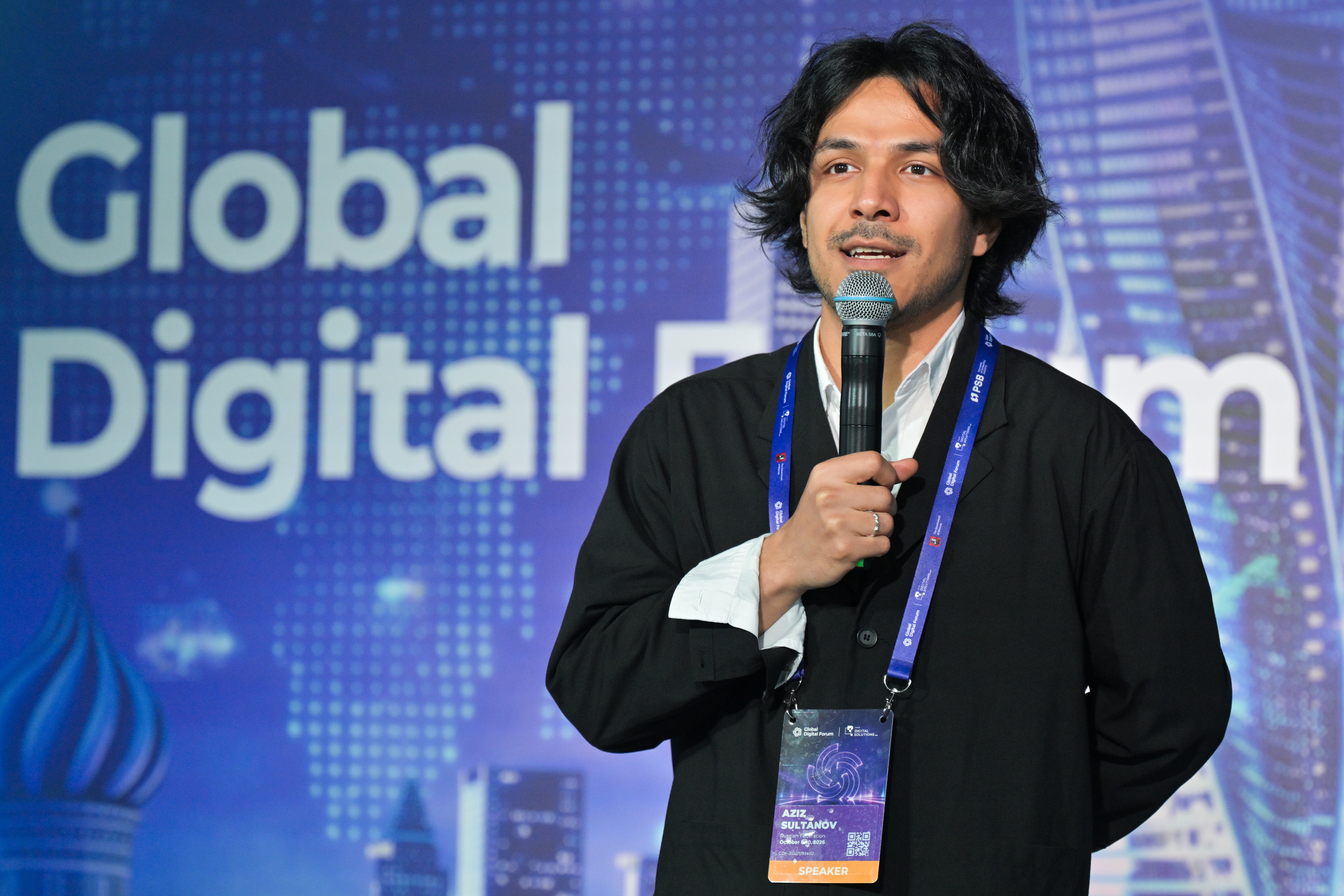
Aziz Sultanov, an engineer at the Pirogov Russian National Research Medical University, a neural network specialist and graduate of the New Media Workshop, emphasized that AI technologies are rapidly becoming more user-friendly, opening up opportunities for people without a technical background.
“Things have become much simpler than they used to be. Even what I’m going to tell you now won’t seem as important a year from now. That’s because the process is becoming simpler, and working with AI technologies is getting easier,” he said.
During a Journalists’ School session, experts discussed how neural networks would transform information formats for mass audiences.
The Forum is held with the support of the Russian Government, the Ministry of Digital Development, and the Russian Foreign Ministry. Forum partners include the Moscow Government (General Partner), Bank PSB Public Joint-Stock Company (Strategic Partner), А7 Russian International Settlement System (Special Partner), VKontakte (Official Partner), Roscosmos and the TsNIIMash rocket and spacecraft scientific center (Space Partners), Rostelecom (Technology Partner), RIA Novosti (General Media Partner), and Kommersant Publishing House (General Information Partner). Other forum partners are Russian companies Positive Technologies, Ruwiki, Signaltec, TData and Petroglyph. The forum is operated by National Priorities and NPO Center for Global IT-Cooperation.