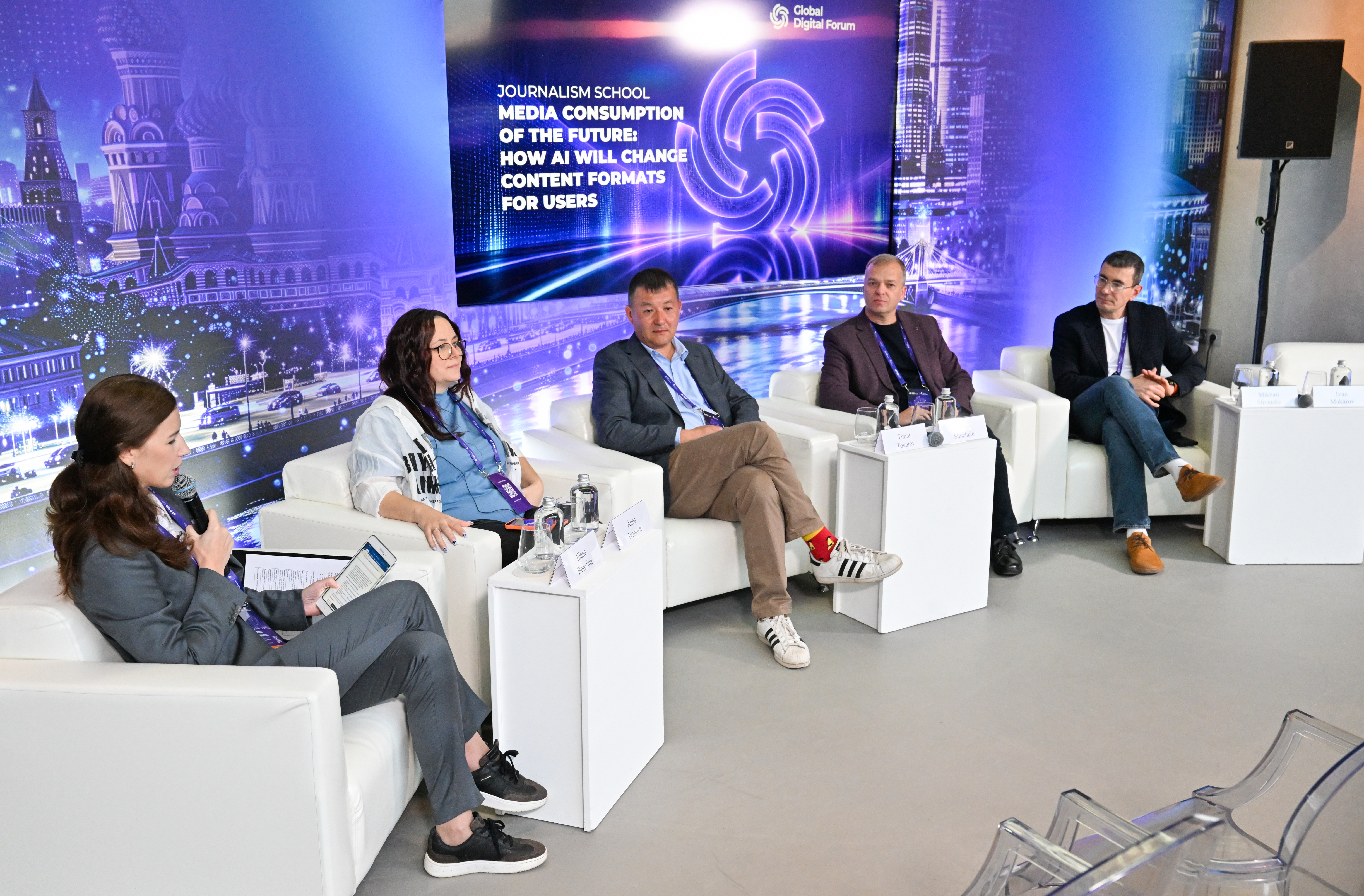



Students at the Bloggers’ School, held as part of the Global Digital Forum, learned how to use the large language models interface, formulate queries, and work with context. In the last part of the workshop, the participants figured out how to combine all these techniques into a consistent workflow.
Aziz Sultanov, an engineer at the Pirogov Russian National Research Medical University, a neural network specialist and graduate of the New Media Workshop, emphasized that AI technologies are rapidly becoming more user-friendly, opening up opportunities for people without a technical background.
“Things have become much simpler than they used to be. Even what I'm going to tell you now won't seem as important a year from now. That's because the process is becoming simpler, and working with AI technologies is getting easier,” he said.
He thinks that the natural language is going to be the new programming language.
“Now, to communicate with AI, we simply need to speak in natural language—just as we speak to a colleague or friend. And for people who haven’t paid much attention to computer science and programming, this is good news. Now we can create websites, presentations, apps, programs, and even mobile apps,” Sultanov noted.
He pointed out that earlier a user only had to type a prompt, get an answer and write the prompt again – and thus every step of the dialogue had to be initiated. Now the task is set only once, and the agent operates autonomously: it searches for information on its own, verifies its own actions, and accomplishes the goals set.
Everything changed in 2026. Six months or a year from now, you will not need to know this. Just say, “Build me an interface,” the expert can say.
Notwithstanding simplifications, there are still certain rules for formulating prompts. Aziz Sultanov highlighted several of them.
“To make the model work properly, the prompt structure should carry its purpose. It is most important. Then comes the context and the examples - they are optional but useful elements - as well as the format, style, and restrictions, that is, what the user doesn't want to see in the answer. If we specify all of this, we will get a quality response,” he stressed.
A key change of recent years has been the removal of the requirement to specify the role in the request.
Have you noticed that there’s no role? Previously, we would write: “You are a marketer” or “You are a copywriter.” Now there’s no need to specify the role. The model understands from the context what is being discussed,” explained Aziz Sultanov.
He also noted that voice input could also be used: “Not many people use this feature, but it significantly speeds up your work.”
However, as the expert emphasized in the end of his presentation, it’s not worth relying completely on AI and it is essential to use critical thinking and verify information, since ultimately the responsibility still lies with the individual.
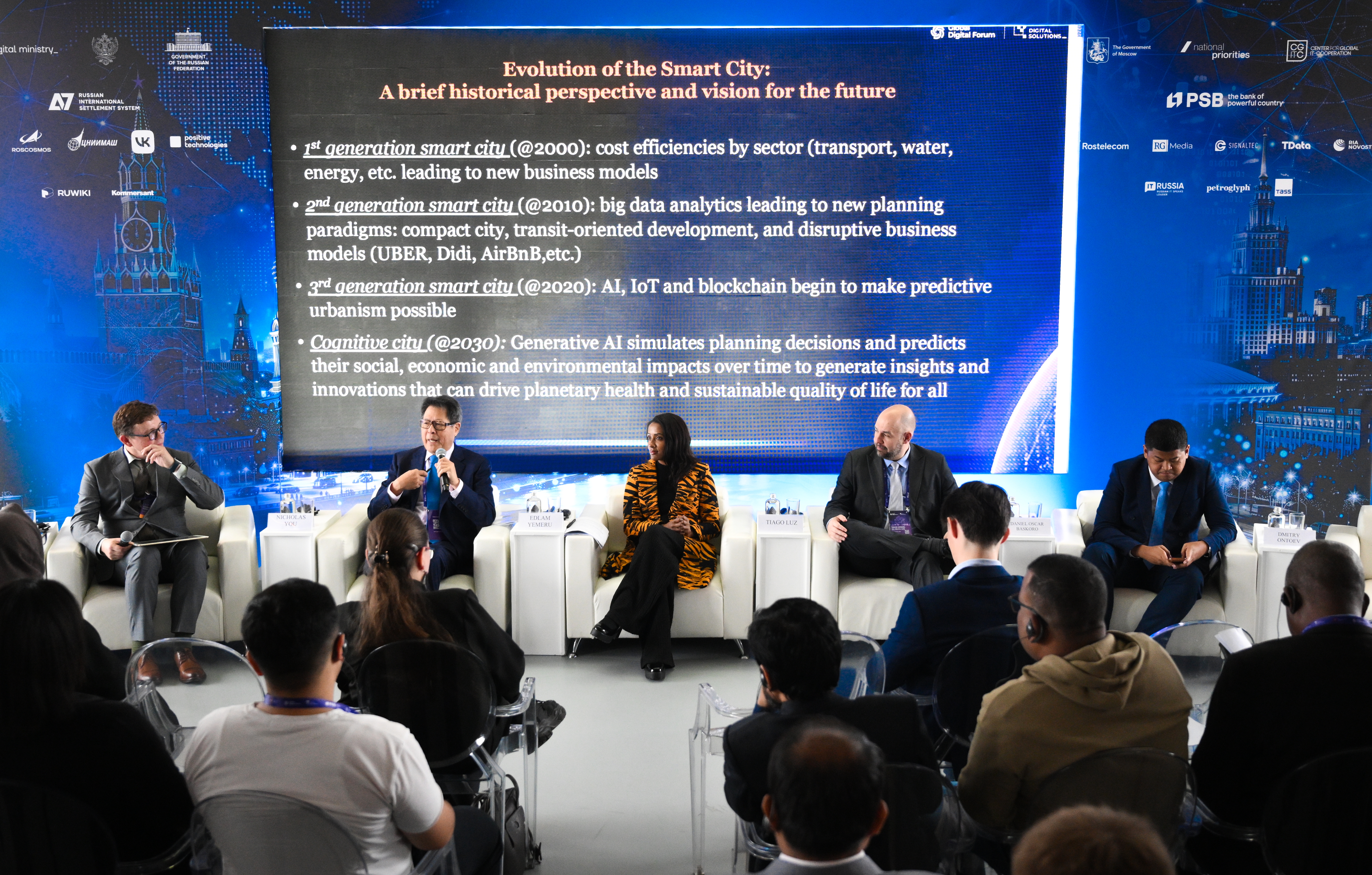
The Bloggers’ School was held at the 2nd Global Digital Forum in Moscow with the support of the New Media Workshop. Throughout three days, more than 50 international journalists, bloggers, media managers, and researchers from various countries studied digital media trends, refined their skills in content creation, working with neural networks, fact-checking, and explored Russian media platforms and practices.
The intensive work, built on the practical tasks currently facing content creators and distributors, regardless of the country and the media market, included master classes, lectures and practical training.