

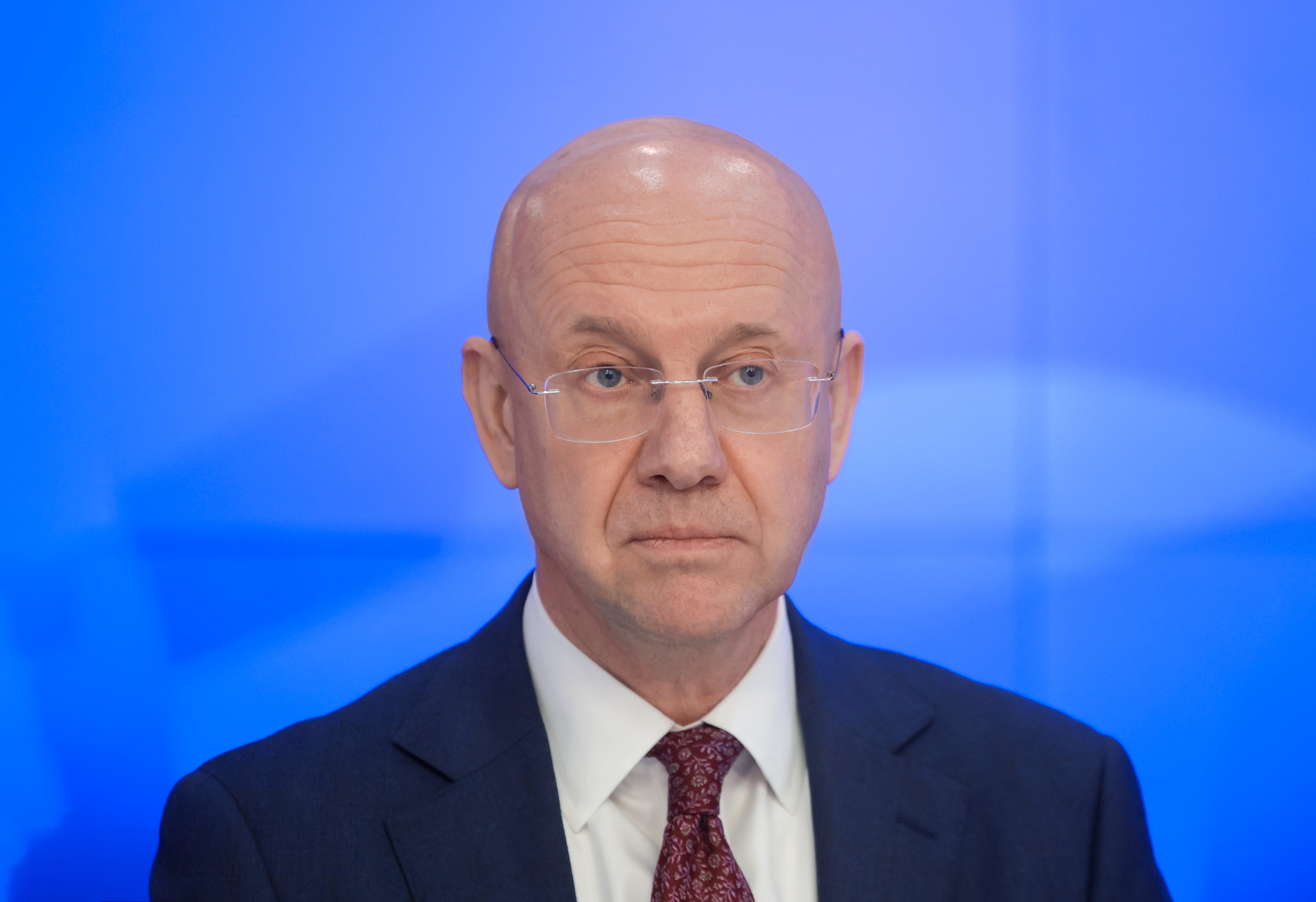
Discussions at the Global Digital Forum will focus on strengthening international cooperation in the IT sector in the context of national sovereignty, bridging the digital divide and ensuring access to technology and resources free from any discrimination. Russia’s Deputy Foreign Minister Alexander Alimov sat down for an interview on the challenges of the digital transition the international community faces and Russia’s initiatives on international information security.
Question: Moscow will be hosting the 2nd Global Digital Forum in early October 2026. As far as we understand, the Russian Foreign Ministry is proactively involved in preparing this event. Could you offer us a more detailed insight?
Alexander Alimov: From the outset, the Global Digital Forum was conceived as a platform for promoting a conversation with our friends from developing countries on the global digital agenda, while also stepping up mutually beneficial cooperation in information and communications technology (ICT). The GDF’s previous edition took place in Nizhny Novgorod in 2025, demonstrating the effectiveness of this framework. Considering this breakthrough, the Russian Government, supported by the Presidential Executive Office, the Ministry of Digital Development and the Foreign Ministry, decided to ensure that this important initiative continues.
I strongly believe that the upcoming GDF will be even more successful and will achieve an even bigger scale, while offering a packed and meaningful agenda. Representatives from more than 100 countries applied to attend it, including several dozen high-level delegations. As usual, senior executives of international organizations, primarily the United Nations and the International Telecommunications Union, will take part in the forum. The fact that it attracts so much attention internationally demonstrates Russia’s special role in promoting the digital agenda around the world, as well as the commitment by the developing countries to work with us.
Question: Why have developing countries been so interested in working with Russia on the digital agenda? What’s the secret here?
Alexander Alimov: Introducing digital technology in social and economic processes has become imperative in terms of national development in today’s world since it has a direct bearing on the quality of life and wellbeing of the people. At the same time, there are also new risks related to security and sovereignty, which stem from ICT vulnerabilities, attempts by certain governments to monopolize ICT markets and use them to interfere in the domestic affairs of independent states.
Russia has come a long way in this regard. Not only did it emerge as a leader in promoting the digital transition but it also attaches great importance to ICT safety and security. Recent events have demonstrated our ability to repel cyberattacks, even on a massive scale, and to accelerate the adoption of digital technologies despite numerous economic restrictions. Russia’s unique experience is clearly of great interest to developing nations, which fully understand the importance of ensuring digital sovereignty. This is why we believe that this kind of cooperation has a great future. The GDF’s mission is to offer a platform for initiating and strengthening cooperation along these lines.
Question: How will international information security be treated within the forum’s agenda? How has Russia been contributing to multilateral dialogue on this topic?
Alexander Alimov: As a topic, international information security (IIS) is central to the forum’s agenda. In fact, this is becoming an increasingly important topic every year. We are witnessing attempts to weaponize the private sector with military agencies and special services recruiting major IT companies as contractors, while digital technology is used for military purposes, including planning operations, espionage and targeting. Cybercrime is on the rise, including on the back of AI, which makes carrying out cyberattacks and breaking into various systems quicker and easier. Hackers are becoming increasingly involved in carrying out hybrid operations against adversaries. Therefore, what we are witnessing a process whereby criminal networks are merging with government actors.
To discuss all these challenges at the GDF, we intend to hold a dedicated session titled International Cooperation in Ensuring Information Security. It will offer us an opportunity to demonstrate Russia’s leading role in IIS negotiations. In fact, it was our initiative to launch this dialogue within the United Nations back in 1998. It was at our initiative that the first universal treaty was signed for the digital sector in the form of the UN Convention Against Cybercrime. It is designed to promote cooperation among law enforcement agencies in fighting cyberfraud and other crimes. Over 80 countries have already signed this document, and Azerbaijan, Vietnam and Qatar ratified it. Russia is currently working on ratifying this convention. It was also Russia’s proposal to set up the first universal confidence-building mechanism in IIS in the form of a Global Intergovernmental Points of Contact Directory. Its mission consists of enabling technical specialists to promptly exchange information and identify resources engaging in malicious activity. I believe that the next step must be to draft legally binding documents covering information security in all its aspects. In particular, this includes plans to step up dialogue to reach agreements on preventing states from using ICT for malicious purposes.
Question: Will AI be on the GDF’s agenda?
Alexander Alimov: Of course. AI will be very high on the agenda of the Global Digital Forum. AI is one of the most sought-after and rapidly improving digital technologies. Interest in AI stems from its growing impact on nearly every area of modern life. It is increasingly clear that the sustainable development of our nations depends largely on the international community’s ability to reach agreements on the development and use of AI, and to work together to mitigate AI-related risks.
In fact, we invited many high-profile international experts, including UN Under-Secretary-General Amandeep Singh Gill and members of the UN Independent International Scientific Panel on AI, to discuss this agenda. This conversation will focus on the most urgent topics for the countries of the Global Majority, including stepping up international cooperation while respecting state sovereignty, bridging the digital divide and capacity building, and ensuring non-discriminatory access to technology and resources. I have no doubt that the forum will serve as a platform for promoting open and meaningful dialogue on all these matters.